People often ask for a single rune of luck.
But “luck” can mean very different things. It might mean having the resources to act, recognising good timing, finding a fair exchange, feeling that you belong, seeing a situation more clearly or noticing that something is finally ready to change.
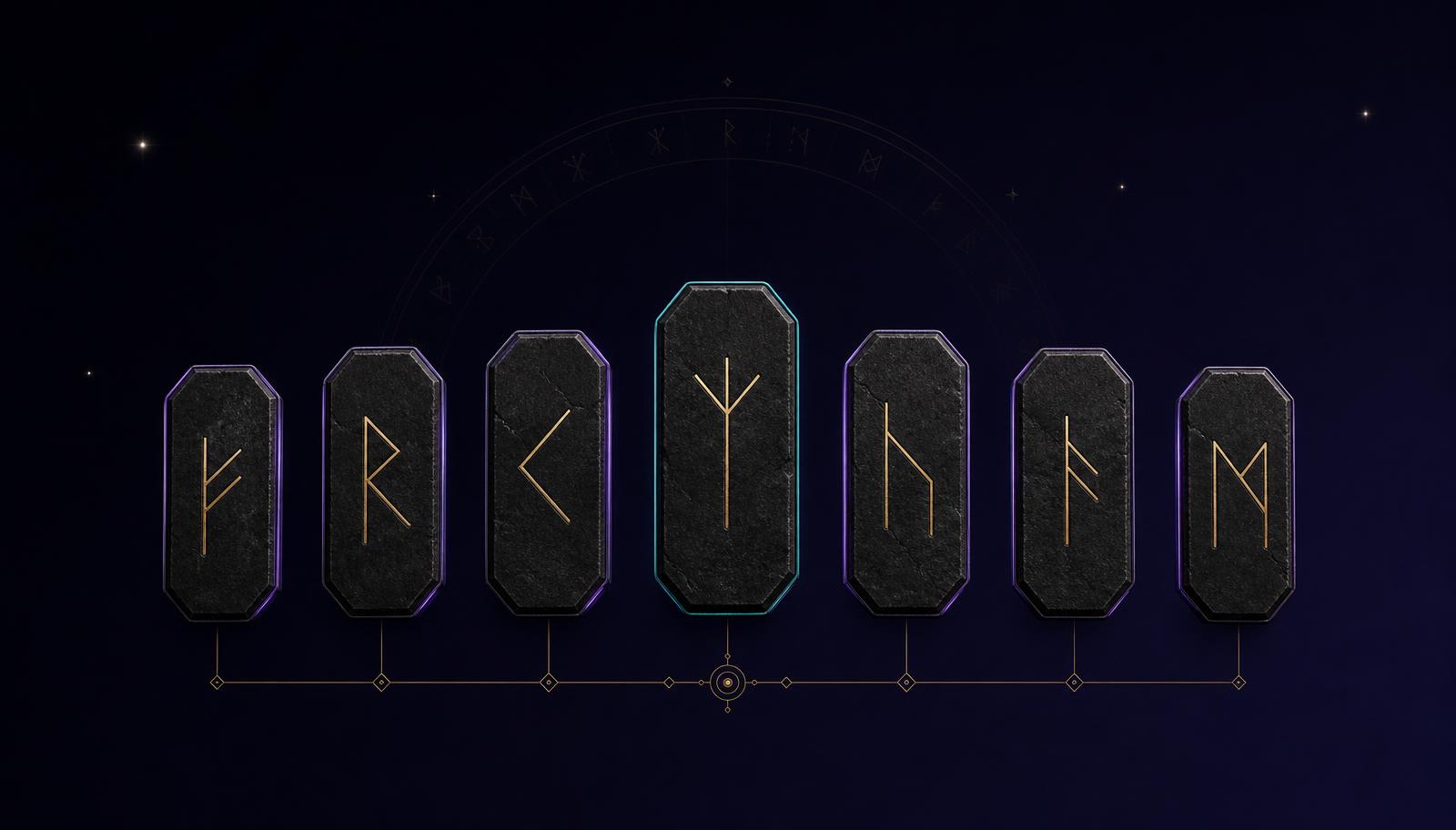
Modern rune reading therefore does not need one universal “luck rune”. Zodiac Fortune Club uses seven runes as different symbolic lenses: Fehu, Wunjo, Jera, Sowilo, Gebo, Ingwaz and Dagaz.
The runes themselves are historical writing symbols. The luck associations in this article are modern reflections. Keeping those two facts separate makes the guide both more useful and more historically responsible.
Quick answer — seven runes
| Rune | Modern theme | Reflection question |
|---|---|---|
| ᚠ Fehu | Resources & Value | What resource deserves more deliberate use? |
| ᚹ Wunjo | Joy & Belonging | Where does life already feel like a good fit? |
| ᛃ Jera | Timing & Harvest | What is maturing because I stayed consistent? |
| ᛋ Sowilo | Clarity & Direction | What becomes simpler once I name the goal? |
| ᚷ Gebo | Exchange & Reciprocity | Is this exchange balanced for everyone involved? |
| ᛜ Ingwaz | Potential & Development | What still needs quiet preparation? |
| ᛞ Dagaz | Transition & Perspective | What can no longer be understood in the old way? |
These are modern editorial labels, not fixed ancient fortune-telling definitions.
Runes were writing before they were reflection tools
Runes were letters used in related Germanic writing systems. The earlier Elder Futhark contains 24 characters. The Younger Futhark, associated with the Viking Age, contains 16.
Their primary function was writing. Inscriptions appear on objects, memorial stones, tools, jewellery and everyday items, and some inscriptions or later traditions have ritual or magical contexts.
Many of the names commonly used for Elder Futhark runes — Fehu, Wunjo, Jera — are reconstructed from later rune-name traditions, rune poems and linguistic evidence. They help us understand sound values and word associations, but they are not a surviving interpretation manual. The full symbol-by-symbol reference lives in our Rune Meanings library.
Historical evidence vs modern rune reading
There is evidence that some runic inscriptions belonged to ritual, protective or magical contexts, and medieval literature contains stories involving runes.
That is not the same as evidence for the modern practice of drawing one of 24 stones from a bag and reading a standard meaning chart. The fixed rune oracle familiar today developed through later esoteric and reflective practice.
So a rune reading at Zodiac Fortune Club means a modern symbolic interpretation inspired by rune names, rune poems and later cultural associations — not a scientifically validated prediction and not a fully preserved Viking-Age oracle.
What does “luck” mean here?
Luck is not one single condition. It can describe resources, timing, reciprocity, clarity, belonging, careful development or a genuine change of perspective.
That is exactly why a single universal luck rune would be too blunt. Fehu suits a question about resources. Jera suits long, patient work. Dagaz belongs to a turning point. The useful rune depends on the kind of question you are holding.