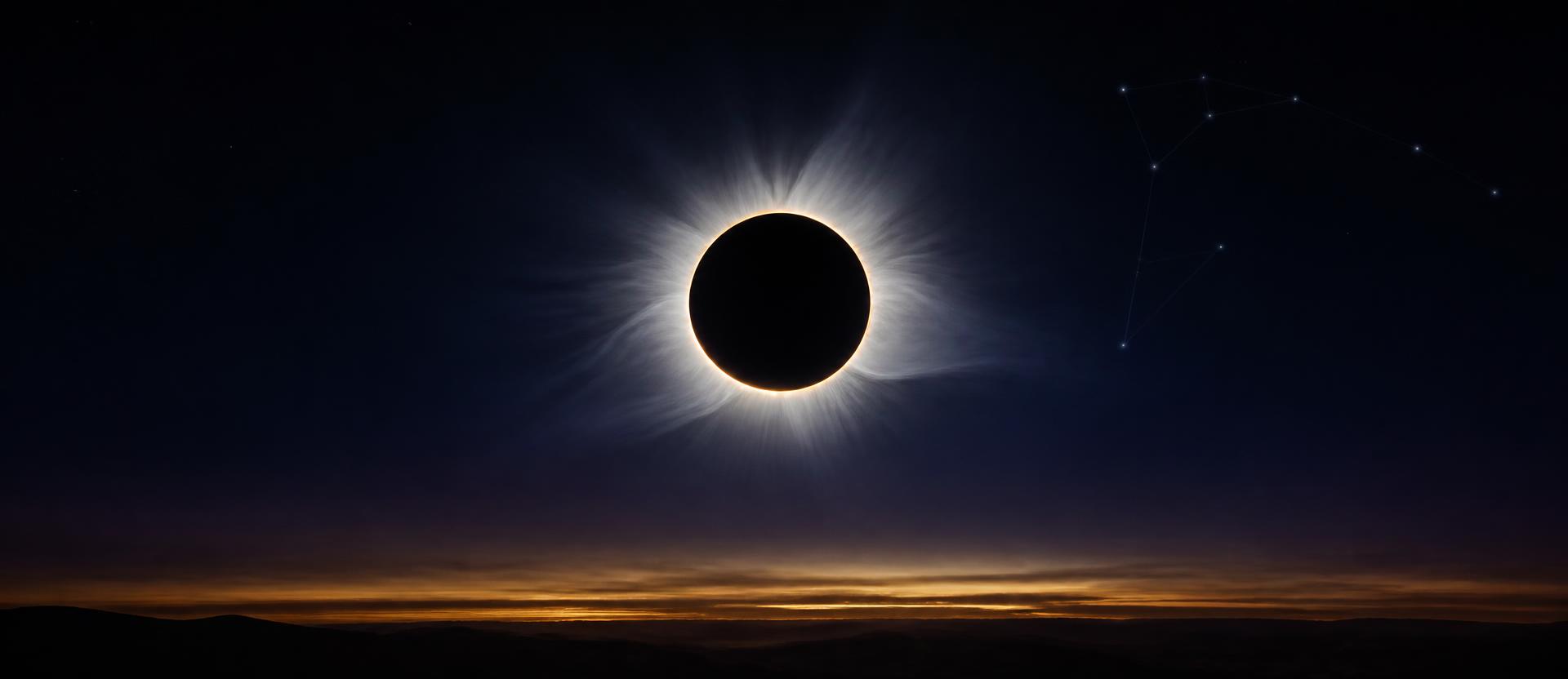
Solar Eclipse on 12 August 2026: Meaning for Every Zodiac Sign
The sky darkens for a moment, but the more interesting question begins afterward. Explore the Leo eclipse themes of courage, visibility and authentic direction.
The sky changes for minutes. What you choose to notice may stay with you much longer.
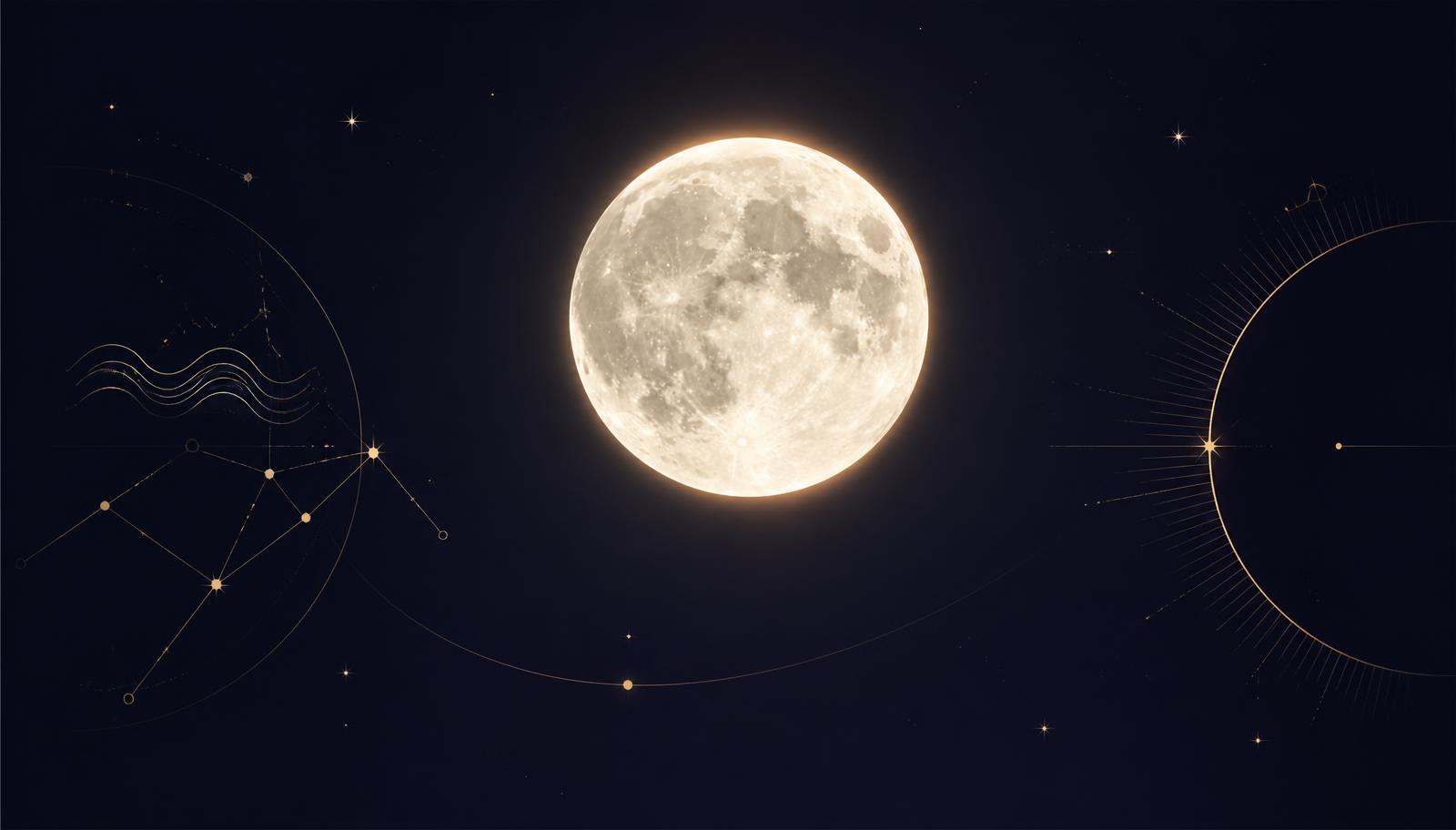
On 12 August 2026, the Moon will pass between Earth and the Sun, creating one of the year’s most memorable astronomical events. Along a narrow path crossing parts of Greenland, Iceland, northern Russia, Spain and a small area of Portugal, observers will experience a total solar eclipse. Across much of the rest of Europe, as well as parts of northern North America and north-western Africa, the eclipse will be partial.
For a few minutes, familiar daylight will look different. Yet the lasting fascination of an eclipse is not only the darkness itself. It is the way an unusual sky can interrupt an ordinary day and make us pay attention.
Astronomy explains what is happening above us. Astrology offers a separate symbolic language for reflection. In Western tropical astrology, this eclipse takes place at approximately 20 degrees of Leo. It can therefore be explored through themes associated with Leo: visibility, courage, creativity, pride, leadership and the desire to live from the heart.
This does not mean that the eclipse predicts a fixed event. It offers a timely question instead:
What part of your life is asking to be seen more honestly?
What happens during a solar eclipse?
A solar eclipse occurs when the Moon moves between Earth and the Sun and blocks some or all of the Sun’s visible surface.
Inside the narrow path of totality, the Moon completely covers the bright solar disc for a short time. The sky darkens, the temperature may fall and the Sun’s faint outer atmosphere—the corona—becomes visible.
Outside that path, observers see a partial eclipse. The Moon covers only part of the Sun, and there is no safe moment to look directly at it without proper solar protection.
The 12 August event is especially notable for Europe. It is the first total solar eclipse visible from mainland Europe since 1999. Estonia, Finland and Germany will experience a partial eclipse. Visibility differs across Russia: some northern areas lie within the path of totality, while many other locations see only a partial phase or no visible eclipse.
Local start, maximum and end times vary significantly. Check a reliable astronomical map for your exact location before making viewing plans.
Totality crosses parts of Greenland, Iceland, northern Russia, Spain and a small area of Portugal. Much of Europe, northern North America and north-western Africa sees a partial eclipse. Local visibility and timing vary.
Check local visibility and timingProtect your eyes
Never look directly at the uneclipsed or partially eclipsed Sun without suitable eye protection.
Ordinary sunglasses are not safe, no matter how dark they appear. Use genuine eclipse glasses or a handheld solar viewer that meets the ISO 12312-2 safety requirements and comes from a trustworthy supplier.
Do not look through a camera lens, telescope or binoculars while wearing eclipse glasses. Magnifying equipment requires a specialist solar filter fitted securely over the front of the instrument.
If you are outside the path of totality, eye protection must remain on throughout direct viewing. An indirect method, such as a pinhole projector, is another safe way to follow the partial phases.
18+ entertainment only. Astrology interpretations are intended for reflection and entertainment. They do not replace professional, medical, legal or financial advice and do not predict gambling outcomes.
Read next
Chosen for you by zodiac sign and topic.
- Jupiter in Leo 2026: Zodiac Luck, Confidence & Golden Fortune Energy
A golden, confidence-soft guide to Jupiter in Leo 2026 — lucky numbers, lucky colours and a personal fortune ritual.
Shared themes: Luck & Risk · Lucky Numbers · Leo
Jun 25, 2026
- Lucky Colours by Zodiac Sign: What Colour Matches Your Energy?
A shareable colour map of the zodiac — and three tiny rituals for love, work and confidence.
Shared themes: Lucky Numbers · Luck & Risk · Leo
Jun 18, 2026
- Jupiter Trine Neptune July 2026: Dreams, Hope & Zodiac Fortune Reflection
A hopeful, dream-soft guide to Jupiter trine Neptune (20 Jul 2026).
Shared themes: Luck & Risk · Lucky Numbers
Jun 25, 2026