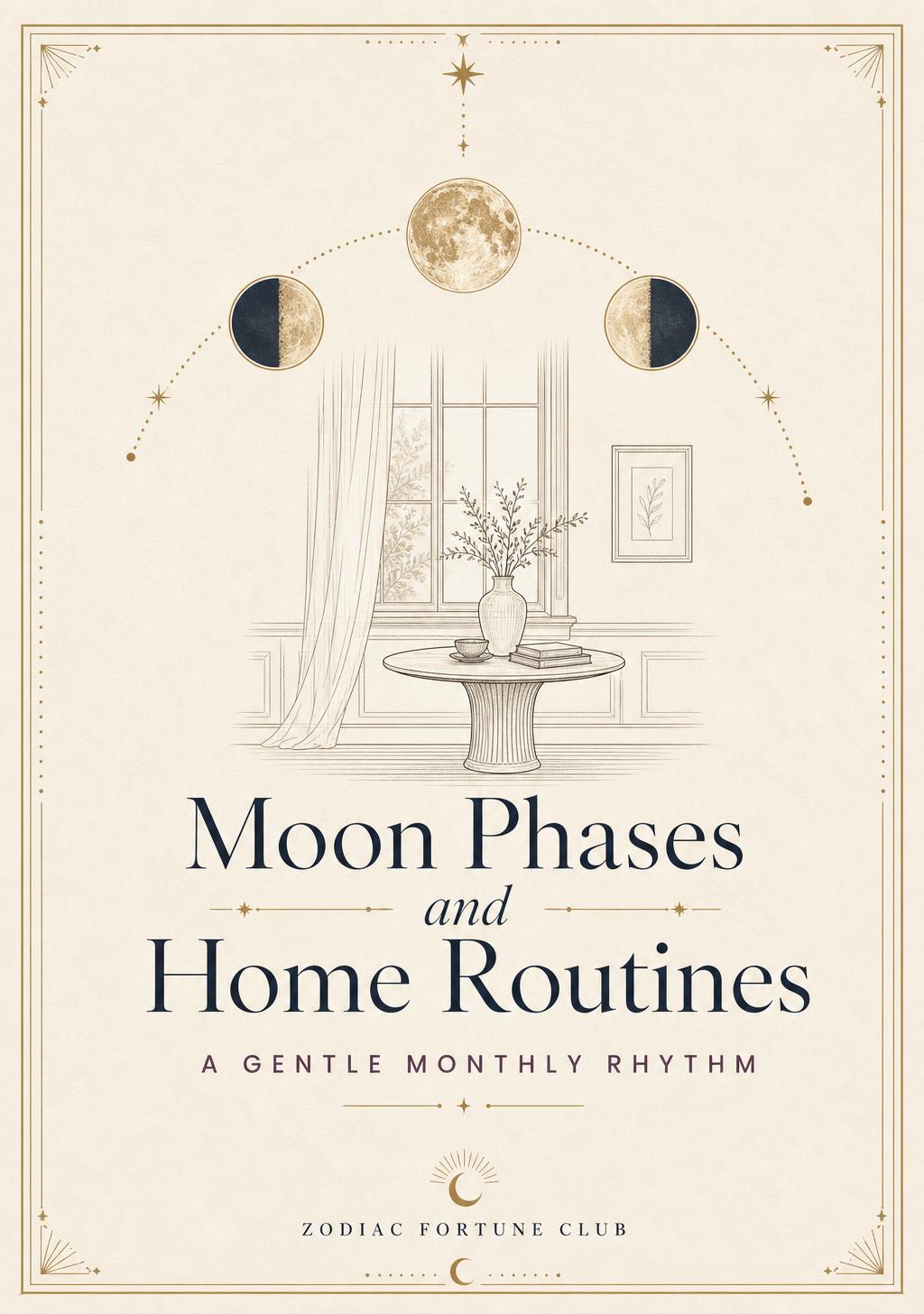
The Moon changes its visible shape across the month, but the Moon itself is not changing shape. What we see depends on the positions of the Sun, Earth and Moon. As the Moon travels around Earth, different portions of its sunlit half become visible from our viewpoint. This is astronomy.
Astrology and ritual traditions use the same visible cycle symbolically. They may associate the phases with beginning, building, reviewing or releasing. This is interpretation, not scientific prediction.
The four-part guide below keeps those two ideas separate. Each phase includes a short astronomy explanation, one optional symbolic theme, one simple home routine and one reflection question. You may use the routines as monthly attention markers, even if you do not follow astrology.
What causes Moon phases?
The Moon does not produce its own visible light — it reflects sunlight. Half of the Moon is always illuminated by the Sun, except during a lunar eclipse. From Earth we see different portions of that illuminated half as the Moon orbits us. The changing view creates the familiar phases.
The main visible stages used in this guide are New Moon, First Quarter, Full Moon and Last Quarter. Between them are the crescent and gibbous phases. The complete cycle takes about one month.
Important: Moon phases are not caused by Earth's shadow. Earth's shadow is only involved during a lunar eclipse.
Reflection: What changes in appearance without changing its essential nature?
Read next
Chosen for you by zodiac sign and topic.
- Family Boundaries at Home: Clearer Expectations and Calmer Communication
Boundaries at home do not need to feel cold. Clear expectations can reduce repeated tension and make care more dependable.
Shared themes: Family · Health & Self-Care
Jul 29, 2026
- A 15-Minute Evening Reset for a Calmer Home
A calmer morning often begins the night before. This short evening reset focuses only on the surfaces, objects and decisions that make tomorrow easier.
Shared themes: Health & Self-Care · Family
Jul 29, 2026
- Create a Rest Corner at Home That Reflects Your Zodiac Element
You do not need a spare room to create a place for rest. One chair, one light source and one meaningful detail can be enough.
Shared themes: Health & Self-Care · Family
Jul 29, 2026